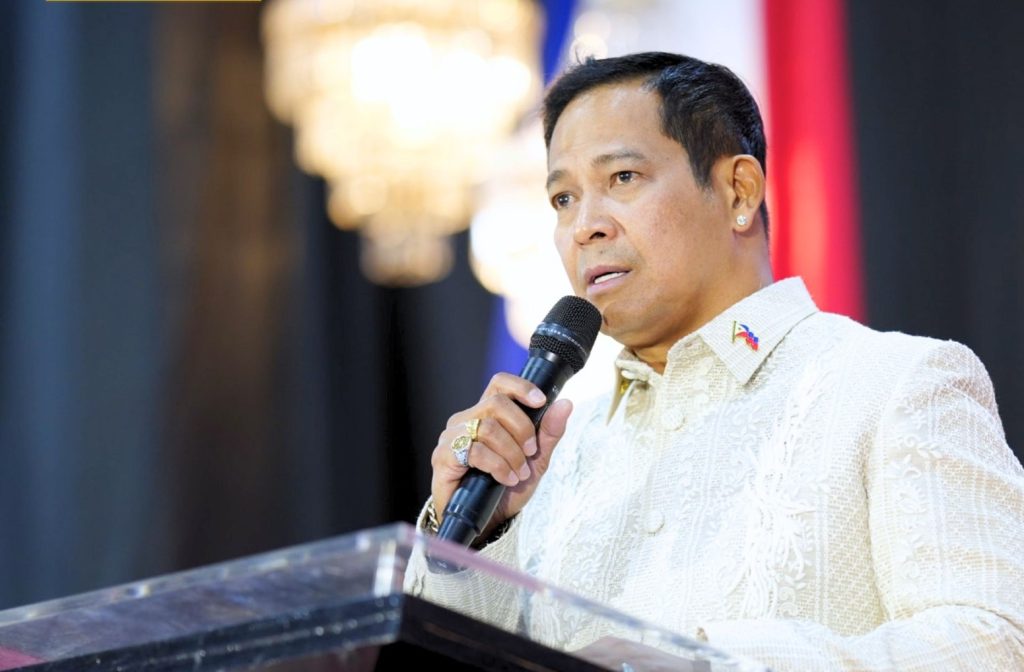
CITY OF MALOLOS, Bulacan – Bulacan has sustained strong growth and development over the past six years under Governor Daniel R. Fernando, transforming pandemic-era challenges into opportunities for progress.
From COVID-19 response and recovery in his first two years, Bulacan’s economy rebounded to become the seventh most progressive province in the country by 2023, with a gross provincial domestic product (GPDP) of ₱631.6 billion, according to the Philippine Statistics Authority.
With this, Bulacan’s economy is now mainly driven by various industries including manufacturing, construction, and tourism, which accounts for 27 percent of Central Luzon’s ₱2.32 trillion regional output.


As the province is now on the verge of economic transformation, Fernando aims to push Bulacan further along its development trajectory, anchored on economic growth, social equity, flood control, and fiscal reforms, aligned with the national vision of AmBisyon Natin 2040.
Bulacan’s dynamic investment climate was recently recognized with the Presidential Award for Outstanding Development Partner and the Gawad Bayanihan sa Pamumuhunan Award for its implementation of strategic investment facilitation under EO No. 18.
The Bulacan Mega City continues to attract major investments, including ₱14 billion from the People’s Republic of China.
In addition, negotiations with the Philippine Economic Zone Authority are underway to further enhance investor interest.
Complementing industrial growth, the province is also advancing agricultural productivity through the operational Farmers and Fisherfolks Training Center in Malolos and the upcoming Bulacan Productivity Center in Doña Remedios Trinidad, designed to build a full agri-supply chain.
To mitigate flood risks that threaten development, the province is continuing dredging and river restoration projects, particularly along the Marilao-Meycauayan-Obando River System.
Fernando has called on the national government to support the construction of additional water impounding facilities near Ipo Dam and in Calumpit to complement Bayabas Dam, now under construction.
The rollout of Stage 3 of the Bulacan Bulk Water Supply Project will also help ensure water security for several municipalities and Baliwag City, reducing reliance on saltwater-intruded groundwater.
In social services, educational assistance coverage increased from 11,000 in 2019 to 18,000 in 2024, with a target of 19,000 beneficiaries this year.
Through a partnership with Land Bank, students can now access their allowance through ATM cards without traveling to the Provincial Capitol.
On health, new facilities were opened at Bulacan Medical Center, including an ophthalmology department, a physical therapy unit, and an expanded 66-bed ICU; while a mental health department is being fast-tracked to respond to growing needs.
To sustain programs and reduce reliance on national allocations, Bulacan is enhancing local revenue generation by aligning with the Real Property Valuation and Assessment Reform Act (RA 12001), adopting market value as the single valuation base for property tax assessments.
A tax amnesty for delinquent payers is in effect until July 2026 to support compliance.
Fernando vowed that he remained focused on delivering lasting impact from policies set in motion over the last six years, as Bulacan continues its path toward becoming a first-world province by 2040. (MJSC/SFV-PIA Region 3-Bulacan)