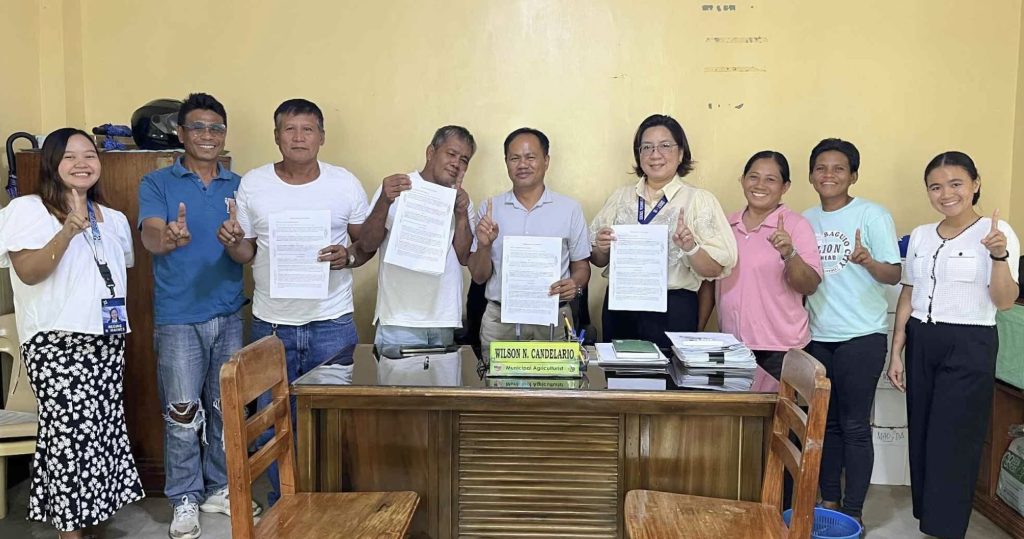
BALER, Aurora – A total of 5 farmers’ associations in Aurora are set to enhance their capacity in sustainable agriculture through solar-powered irrigation technology from the Department of Science and Technology (DOST).
Each unit amounting to P165,000 will be received by the Decoliat Multi-Agri Commodity Farmers Association, San Joaquin Farmers Association, Bianoan New Generations Farmers Association, Imulat Lowland Upland Farmers Association, and the provincial government of Aurora, strengthening their ability to secure water access and reduce production costs.
DOST Aurora Science Research Specialist Regine Maines-Agumboy said the project falls under the Community Empowerment through Science and Technology (CEST) program, which aims to lower farmers’ production expenses while ensuring steady irrigation.

“It will help reduce expenses since diesel or electric pumps will no longer be needed. Being mobile, the units can also be shared among members who require them,” Agumboy explained.
Each system can operate for up to eight hours under sufficient sunlight and has a maximum discharge capacity of 50 cubic meters per hour, enough to irrigate about half a hectare every hour.
To ensure sustainability, farmer-beneficiaries will undergo training on operation and maintenance before the turnover of the equipment.
“Farmers are expected to operate the units, take responsibility for their upkeep, and ensure safekeeping. DOST will also conduct regular monitoring as part of the implementation to ensure the equipment remains functional and that sufficient irrigation water is available for production,” Agumboy added.
The CEST program provides technology-based livelihood projects and promotes innovation in education, health and nutrition, water and sanitation, disaster risk reduction, and industry development.
Through the initiative, the government reaffirms its commitment to advancing sustainable farming practices, reducing production costs, and strengthening the productivity of smallholder farmers in the province. (CLJD/MJRD, PIA Region 3-Aurora)