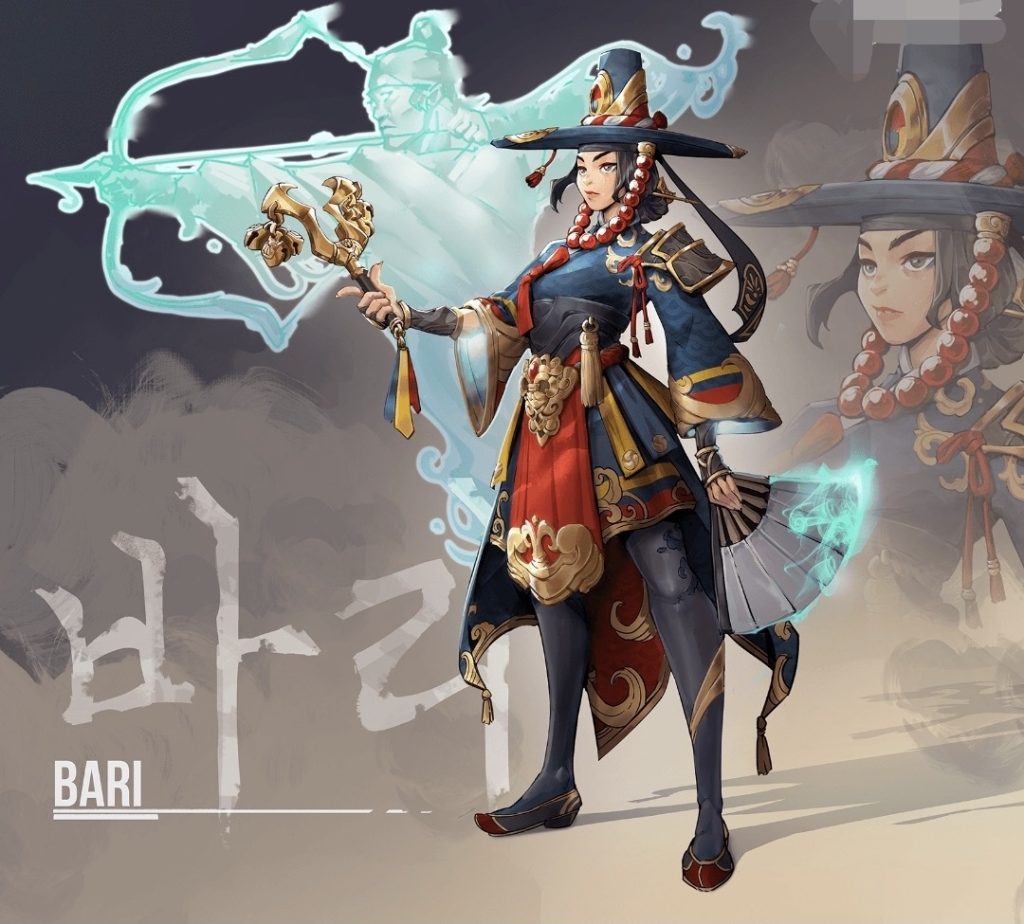
On princess Bari (바리공주), the shamanic epic of the abandoned princess who became the guide of souls
Nearly three thousand years ago, a Greek epic taught the world that a hero’s truest test isn’t the battlefield, but the road home. Korea has its own answer to that epic — older than most of its written literature, and still sung today not in classrooms but at gravesides, where shamans use it to guide the newly dead into the next world. Her name is Bari.
She is the seventh daughter of a king who wanted a son. When she is born a girl for the seventh time, he doesn’t forgive her for it: he has her abandoned in the wilderness — in some tellings, sealed in a box and set adrift at sea — before she has even opened her eyes. She is found and raised in secret, far from the palace that discarded her.
Years later, the king and queen fall incurably ill. A diviner says the only cure is the Water of Life, guarded in a realm far beyond the world of the living, past thresholds no living person is meant to cross. The king summons his six other daughters, one by one. Each of them — married, comfortable, safe — finds a reason to refuse.
So he remembers the daughter he once threw away.

She could say no. It would cost her nothing. She says yes.
Bari cuts her hair, dresses as a traveler, and sets out for the land of the dead. At its border she meets the water’s guardian, a being named Mujangseung, who won’t simply hand it over. First: three years cutting his firewood. Then three years tending his fire. Then three years hauling his water — nine years of labor before he’ll even name his price. When she’s paid it, he asks for more: a wife, sons. She gives him seven, and only then does he let her leave.
She carries the water and the flowers of resurrection home in her arms — and finds a funeral. Her parents, the ones who left her to die, have died waiting for her.
She doesn’t turn back. She opens the coffins herself and pours the water between their lips.
They wake.
Offered half the kingdom as thanks, Bari refuses it. She asks instead to become the one thing the living fear to face alone: a guide for the dead. To this day, Korean shamans invoke her in the jinogwigut, the funeral rite that sends the dead safely into the next world — because she has already made that crossing herself, twice, and returned both times.
Odysseus fought for twenty years to reclaim a kingdom that was already his. Bari walked into death for parents who had already thrown her away, asking nothing in return. The myth insists this — not conquest, not cunning, but a rejected daughter’s mercy — is the harder, greater homecoming. Almost three thousand years after Homer, Bari is still recited over Korean coffins. It may be time she was read beside him, too.
Cum Laude, Angelas University | AIM alumna | California State University, San Bernardino Completion of TESOL Teaching Practicum |17 years in diplomatic service. Now bringing the culture, wellness, and lifestyle of Korea to the Philippines🇰🇷🇵🇭